Cheryl Strayed’s mother
Tiny Beautiful Things: Advice on Love and Life from Dear SugarCheryl Strayed’s mother is a central presence in Cheryl Strayed / Sugar’s life and writing: a woman who left a violent marriage, raised her children as a single parent, and refused to make them choose between honesty about their father’s harm and their love for him. After her death, her final word, the stones she kept, and the counsel she gave her daughter remained active parts of Cheryl Strayed / Sugar’s life. Her influence survives not as an uncomplicated ideal but as a model of kindness under strain, and as the enduring bond at the heart of her daughter’s grief.
Marriage, Separation, and Single Motherhood
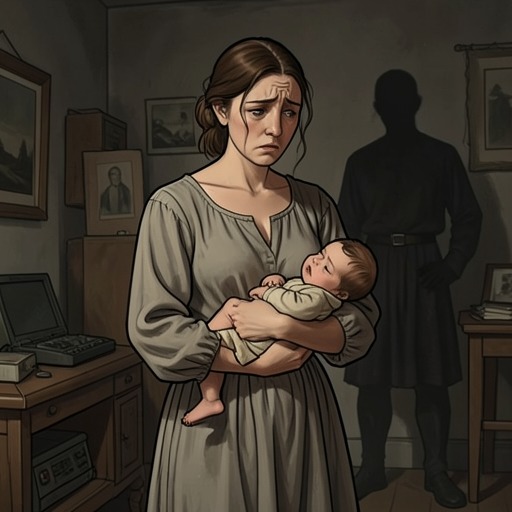
Cheryl Strayed’s mother married Cheryl Strayed’s father when both were nineteen. She was pregnant, abortion was illegal, and she was unwilling to enter a home for wayward girls and give her baby to someone else. The marriage began quickly under those circumstances; over the following nine years, the couple had three children. Cheryl Strayed / Sugar later described Cheryl Strayed’s father as often violent and mean, and the family endured painful experiences she did not need to recount in full for her account of her mother’s influence to be clear.
When Cheryl Strayed / Sugar was six, her mother mustered the courage to divorce Cheryl Strayed’s father. Her daughter later judged this decision probably the single best thing that had happened to her. The separation was not emotionally simple for the child: she loved her father intensely and begged her mother to return to him, sobbing because she understood that the end of the marriage might mean losing her father. Her mother’s decision nonetheless removed the children from the destructive force Cheryl Strayed / Sugar associated with their father.
Her mother raised the children alone. In a later reflection on another single mother, Cheryl Strayed / Sugar distinguished this experience from shared custody or co-parenting: her own mother had been truly alone in parenting. That distinction gives weight to the restraint and care her daughter remembered. She had every reason to hate Cheryl Strayed’s father, but she did not recruit the children into that hatred, even while she had to carry the work of raising them without a co-parent.
Protecting the Children’s Love for Their Father
Cheryl Strayed’s mother did not speak ill of Cheryl Strayed’s father to the children, but neither did she lie about what the family had witnessed or suffered at his hands. She spoke honestly about the hard things and resisted turning him into a monster. Instead, she presented him as human: complicated, flawed, and capable of redemption. For her daughter, this made it possible to continue loving an absent father who was also part of her own identity.
That protection took different forms as Cheryl Strayed / Sugar grew up. When the child asked what had made her mother fall in love with Cheryl Strayed’s father, her mother found things to say, even when she could no longer properly remember them. As a teenager, Cheryl Strayed / Sugar argued with her mother over her refusal to condemn him. Her mother answered that she was grateful to him because, without him, she would not have had her children. This was not a denial of harm; it was an effort to hold gratitude and injury in the same account of a person and a family.
Near the end of her life, when she knew she was going to die, Cheryl Strayed’s mother stroked her daughter’s hair and told her that she could reach out to Cheryl Strayed’s father again if she wished. She urged her to stay open to forgiveness, reconciliation, and change, and reassured her that doing so would not betray her mother. Rather, she framed that openness as evidence of the woman she had raised. The counsel extended the same principle she had practiced throughout her children’s childhood: love need not require denial, and acknowledging a parent’s faults need not erase the relationship.
The Final Visit and the Word That Remained
Cheryl Strayed / Sugar was not beside her mother when she died. Her mother died alone in a hospital room, and for years the absence of a witness became a source of recurring anguish. The final visit remained vivid: her mother was too physically pained to be touched and said, “Please, no,” when her daughter bent to kiss her. Cheryl Strayed / Sugar explained that she would return in the morning. As she put on her coat and said, “I love you,” her mother remained silent until her daughter was almost out the door, then called, “love.” The next morning, Cheryl Strayed / Sugar returned to find her still in bed, now dead.
The last word was incomplete as a sentence—her mother was too sick, weak, and out of her head to summon either “I” or “you”—but her daughter understood that it did not need those words to carry its meaning. The word returned in her mind like an iron bell sounded at dinnertime: “love, love, love, love, love.” She described this death and its last exchange as the genesis story of Sugar, the origin beneath the answers she gave as an advice columnist. In a letter to Johnny, who had said that he did not know the definition of love, she explained that her mother’s final word had stayed with her through the five weeks since he wrote. Her answer grew from that lived experience: love takes many forms and can coexist with sorrow, difficulty, betrayal, and sacrifice.
The last word did not resolve the circumstances of the death. Cheryl Strayed / Sugar repeatedly revisited the choices that kept her from being at her mother’s side, but thinking through them brought no remedy. What remained was the irreversible fact that the last thing between them would always be the last: the refused kiss, the promised return, the spoken declaration, the pause, and the single answering word. Her mother’s “love” consequently became both a gift and a mark of what could not be changed.
Objects, Writing, and Continuing Grief
After her mother’s death, Cheryl Strayed / Sugar’s grief surfaced in bodily and material encounters. When her mother had just died, she found a baby bird with a broken neck, its head lolling to one side. The bird struggled when she tried to soothe it, and she recognized that it was dying. After taking nearly an hour to gather the courage, she placed it in a paper bag and smothered it. The act of ending its suffering brought the memory of her grandfather’s sexual abuse back into the moment: the bird’s pulse beneath her hand recalled a physical memory she had never been able to shake. In the parallel she drew, pressing down was at once murder and mercy. Her mother’s death forms the immediate setting for this episode, while the daughter’s response shows how grief and older trauma could converge in an act of care.
Several months after the death, while clearing the house she had thought of as home, Cheryl Strayed / Sugar found a glass jar of stones at the far end of her mother’s bedroom closet. The jar held stones given by her and her siblings, collected from beaches, trails, and grassy patches at the edges of parking lots. Her mother had called the smooth, mostly black stones, each smaller than a potato chip, worry stones; she said that rubbing one in the palm could soothe the mind. Holding the jar’s cold, heavy weight gave her daughter a fleeting feeling of holding her mother. She sat on the bedroom floor and poured the stones out, touching them as if they were sacred.
The jar could not return the person it seemed, briefly, to contain. Nor could the other belongings Cheryl Strayed / Sugar remembered—the peppermint Tic Tacs in her mother’s car, the fringed moccasins that retained the smell of her size-six feet a year later, her large reading glasses, porcelain horse, bank pen, butter dish, and handmade shirts—make her mother present again. She came to understand that the mother she searched for was nowhere in the objects and would never be found in them. Their power lay instead in how they made memory tangible, without pretending that a keepsake could undo death.
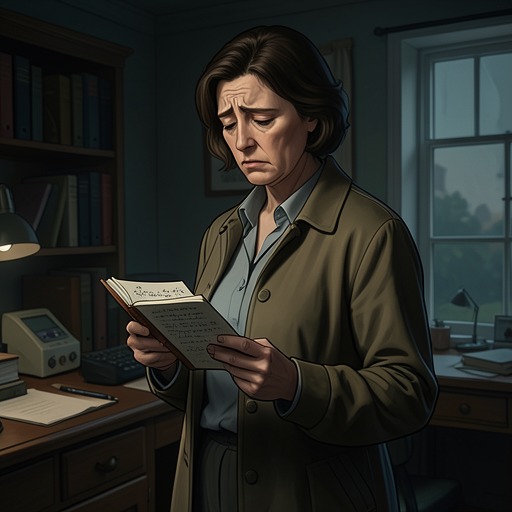
At twenty-eight, still missing her mother, Cheryl Strayed / Sugar kept a two-sided wooden chalkboard in her living room. One side carried a sentence by Flannery O’Connor; the other, a line from Eudora Welty’s The Optimist’s Daughter, a novel she had read repeatedly. The line about a woman thinking only of her mother holding her hands resonated because Cheryl Strayed / Sugar, too, was thinking of one thing: missing her mother and needing to write a book in order to bear living without her. She felt the unwritten book as a second heart, a story whose shape became clear after her mother died. Grants, awards, published stories and essays, extensive journals, and bursts of writing had not made the book appear by themselves. Approaching thirty, she realized she would have to work longer and harder than she had expected to tell the story. Her mother’s absence thus became inseparable from the work of making a book.
Legacy and the Shape of Loss
More than twenty years after the death, Cheryl Strayed / Sugar described herself as having stopped searching for a code that would make the loss intelligible. The stones she once gave her mother had scattered; in their place were stones given to her by her own children. She kept the best ones in her pockets, sometimes carrying a particularly perfect stone for weeks and finding it with her hand, again and again, along its black curve. The object recurs across generations: what had once passed from children to their mother now passed from her children to her, offering a small physical practice of connection without claiming to replace the dead.
A conversation with a woman whose mother had also died in her teens gave Cheryl Strayed / Sugar a blunt formulation of their shared knowledge: “It will never be okay that our mothers are dead.” Both women were writers with children, good relationships, and fulfilling careers, and both could be described as joyful; none of those later goods canceled the absence. Their mothers were missing from graduations, weddings, first-book celebrations, and the births of their children. Grief did not mean they wept every day, but it remained as unspoken words and a tremor at the body’s core, shaping the experience of happiness as well as sorrow. Cheryl Strayed / Sugar’s mother therefore remains present in the account not because loss becomes acceptable, but because love continues to shape the lives built in its aftermath.
Her example also informed Cheryl Strayed / Sugar’s advice to people trying to love someone bereaved. A partner cannot make a mother’s death okay, but can ask about her, offer comfort without waiting to be asked, and make room for her memory in shared occasions such as a wedding. Cheryl Strayed / Sugar recognized this kind of care in Mr. Sugar and in friends and acquaintances: it did not erase the loss, but made it better to bear. Her mother’s legacy is at once personal and practical—the last word that remained with her daughter, and a way of treating another person’s grief with attention and generosity.